Entertainment
The Art of the Cheeky Chuckle: Why Butt Jokes Are the Universal Language of Laughter


Introduction
There exists a comedic device so primal, so universally understood, and so reliably hilarious that it has transcended centuries, cultures, Butt jokes and languages. It is the butt joke. From the silent film era to the modern meme-laden landscapes of TikTok and Twitter, the simple act of referencing the derriere has proven to be a comedic goldmine. But why is this specific form of humor so effective? This article delves into the cultural impact, psychological appeal, and enduring popularity of the humble butt joke, exploring how this “lowbrow” humor has cemented its place as a high-ranking champion of comedy.
The Timeless Appeal and Universality of Butt Humor
Butt jokes are a staple of comedy because they tap into a shared human experience. We all have one, and the awkwardness, absurdity, and bodily functions associated with them create an immediate and equalizing point of connection. This universal relatability is precisely why they break down social barriers. A well-timed joke about one’s rear end can diffuse tension, create camaraderie, and bridge gaps between different demographics, as laughter over such a simple and “immature” subject often requires no sophisticated cultural or intellectual context.
This universal appeal is rooted in the psychology of humor. Our brains are wired to find amusement in things that break social norms or highlight the absurdity of our physical existence. The butt joke, often involving topics considered taboo, provides a harmless and cathartic release. It’s an act of lighthearted rebellion that reminds us not to take life so seriously. As one source perfectly summarizes, it’s “the kind of humor that doesn’t require deep thinking, just a good laugh at something universally goofy”.
A Brief History: From the Ancients to Animation
The butt joke is far from a modern invention. Its roots can be traced back to ancient times, where jokes about bodily functions and anatomy were common in literature and performances. The tradition continued through history, becoming a staple in the works of comedic greats like Shakespeare and the slapstick routines of silent film stars like Charlie Chaplin and Buster Keaton. In the realm of animation, the “fanny gag” became a cornerstone of Hollywood cartoons, a tradition so deeply ingrained that one animator noted it became a specialty, with films like Aladdin and Beauty and the Beast relying on the visual comedy of a well-placed derriere poke or sagging pants to get a guaranteed laugh from audiences worldwide.
This cross-cultural effectiveness is perhaps the butt joke’s greatest superpower. The power of a body-based joke transcends the barrier of language. While a witty pun like “If it’s not Baroque, don’t fix it!” may leave international audiences scratching their heads, a pair of falling pants is universally understood. This was famously observed during the international release of Disney’s Beauty and the Beast, where the biggest laugh in multiple countries came not from a clever dialogue pun, but from a character’s pants falling down. This proves that lowbrow humor often has the highest global reach.
When Butt Jokes Go Viral: The Modern Meme Culture
In the digital age, the butt joke has found a new, fertile breeding ground: internet meme culture. The absurdity and shareability of humor, when blended with everyday situations, create the catchy and viral content that dominates our social feeds. The power of a hashtag or a relatable image, like a comedic “butt” meme, is immense. These are not just jokes; they are shared cultural touchstones that get passed around, simultaneously entertaining users and creating a sense of community among those “in the know”.
This viral nature has even intersected with commerce, as brands and promotional content can become unwittingly woven into the narrative of a viral joke, demonstrating the sheer reach and engagement potential of this humorous format. Whether it’s a clever pun, a roast, or a simple pun about a body part, the modern meme is proof of the butt joke’s enduring power in the digital ecosystem. You can even see this reflected in search data, where keywords like “funny butt jokes,” “viral internet memes,” and “buttocks puns” drive massive traffic.
The Legal Booty: When a Joke Goes Too Far
While most butt jokes are harmless fun, the line between a clever parody and a legal landmine can sometimes be blurry. The story of “South Butt,” a cheeky parody of the outdoor clothing brand North Face, serves as a cautionary tale. A high school student created the parody to mock his classmates’ obsession with the brand, eventually forming South Butt, LLC.
North Face, not wanting to be the “butt of the joke,” filed a lawsuit alleging trademark infringement and dilution. While the case was ultimately settled, it highlights a serious point: even a joke can have serious legal consequences. The case hinged on whether a consumer would be confused into thinking South Butt was affiliated with North Face. A Supreme Court ruling that parody isn’t always a viable defense for using a trademark means that today, the joke could be on the jokester. This real-world drama shows that while we laugh at “butt jokes,” the legal system might be less amused.
Expert Tips on Telling a Good Butt Joke
Mastering the art of the butt joke is about more than just blurting out the first thing that comes to mind. It’s an art form. Some of the best advice comes from a parent who, after dealing with endless “toots” and “buttzantoots” from her children, developed a strategy: “If you’re not going to cut it out, at least let me help you sharpen that joke you’re telling about misplacing a soup pot for a toilet”.
This simple advice implies that context and delivery are key. A well-told butt joke isn’t just shocking; it’s clever, often using wordplay or an unexpected situation to land the punchline. Furthermore, humor serves an important social function. Using “buttzantoots” as a code word during a sad moment transformed a potentially emotional and difficult goodbye into a moment of shared laughter. This reveals that the true power of a good joke isn’t just to make people laugh, but to build bonds. When you use humor to make others feel comfortable and brave, you are using laughter to build confidence and connection.
The Economics of Laughter: Why People Search for Butt Jokes
The popularity of butt jokes isn’t just a cultural phenomenon; it’s also a significant driver of online traffic. People actively search for “butt jokes” for a variety of reasons. They might be looking to break the ice in an awkward situation, find captions for their social media posts, or simply get a good laugh. The sheer volume of results and dedicated lists, ranging from “251 Butt Jokes Guaranteed to Make You Giggle” to “497+ Butt Puns and Jokes,” demonstrates a massive, ever-present demand for this type of humor.
The types of jokes people seek are often segmented to fit specific contexts. For example, “Roast-Worthy Butt Jokes for Friends” and “Kid-Friendly Butt Jokes” are popular for different social situations. There is a clear appetite for humor that is both relatable and ready-made for modern consumption, illustrating that the simple butt joke remains a highly effective and sought-after tool for comedy and connection.
Conclusion
In a world of complex geopolitics and sophisticated entertainment, the simple butt joke remains a powerful and enduring source of joy. Its appeal lies in its universality, its ability to level the playing field and remind us of our shared, slightly ridiculous humanity. From the dawn of comedy to the latest viral meme, the “cheeky chuckle” is a cultural constant that connects us all. So, the next time you hear a groan-worthy pun about a derriere, a well-timed “fart” Butt Jokes in a movie, or see a meme of a dog with its rear end in the air, remember that you are partaking in a rich and unbreakable comedic tradition. It’s a tradition that, despite its lowbrow nature, continues to go viral, proving that sometimes, the oldest jokes are the best—and the funniest.
Frequently Asked Questions (FAQ)
Q: Why are butt jokes so universally funny?
A: Their universality stems from a shared human experience. Everyone has a backside, making the humor relatable. Additionally, breaking social taboos about bodily functions provides a harmless and cathartic release, which our brains find amusing.
Q: What is the history of the butt joke?
A: Butt jokes have ancient roots, appearing in early literature and performances. They were staples in the works of Shakespeare, silent films like those of Chaplin and Keaton, and became a cornerstone of Hollywood animation, where they were known as “fanny gags”.
Q: Are butt jokes considered lowbrow or highbrow humor?
A: They are generally considered “lowbrow” because they are simple, physical, and rely on base humor rather than intellectual wit. However, this very quality gives them a wide appeal and makes them highly effective at transcending cultural and linguistic boundaries.
Q: Can telling a butt joke have legal consequences?
A: Yes, as seen in the “South Butt” case, a parody that too closely mimics a brand’s trademark can lead to a lawsuit for infringement or dilution, especially if it trades on the goodwill of a famous mark.
Q: Why do people search for butt jokes online?
A: People search for them for many practical reasons: to break the ice, find social media captions, entertain friends, or simply get a quick laugh. The jokes are often categorized (e.g., “roasts,” “kid-friendly”) to suit different needs.
Q: What makes a good butt joke?
A: Context and delivery are key. A good butt joke is often clever, using wordplay or an unexpected situation to land the punchline. It can also be used to create a bond and build confidence by sharing a laugh in a comfortable setting.

Entertainment
Guilty as Sock : The Complete Guide to the Viral Meme, Meaning, Origin, and Internet Trend
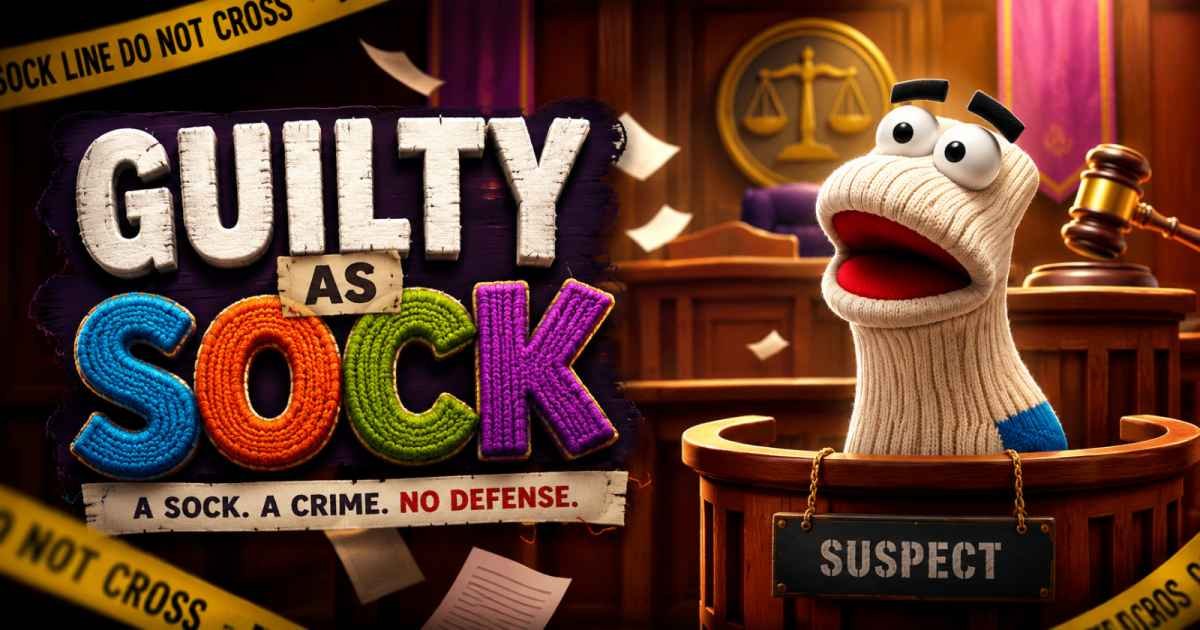
In 2026, “Guilty as Sock“ became one of the internet’s most recognizable humorous phrases. While it may sound like a typo of the legal expression “guilty as charged,” the phrase has evolved into a standalone meme used across social media, gaming communities, reaction images, and humorous merchandise. Whether you’ve seen it in memes, TikTok captions, Discord chats, or online stores, this guide explains everything you need to know about Guilty as Sock.
What Is Guilty as Sock?
Guilty as Sock is an internet slang phrase that intentionally replaces the word “sin” or “charged” with “sock” for comedic effect. The expression is typically paired with images of socks, pets, cartoon characters, or people making obviously guilty facial expressions.
Rather than having a literal meaning, Guilty as Sock is used to humorously admit fault after doing something minor, embarrassing, or mischievous.
Examples include:
- Eating the last slice of pizza.
- Staying up until 3 AM watching videos.
- Buying another pair of sneakers despite promising not to.
- Ignoring messages while appearing online.
The phrase works because it sounds absurd, making it instantly memorable and highly shareable.
The Origin of Guilty as Sock
Unlike many internet memes that have one clear creator, Guilty as Sock appears to have developed organically across social media communities.
Its popularity likely comes from several internet trends:
- Intentional word substitutions for humor.
- Random absurdist memes.
- Animal reaction images.
- Viral caption formats.
- Internet users intentionally misspelling common expressions.
Over time, creators began placing “Guilty as Sock” over funny photographs, particularly those featuring:
- Dogs caught chewing shoes.
- Cats knocking objects off tables.
- Children covered in chocolate.
- Cartoon characters making guilty faces.
- People caught in awkward situations.
The randomness of replacing “charged” with “sock” became part of the joke.
Why Guilty as Sock Became So Popular in 2026
The internet increasingly favors short, strange, and instantly recognizable humor, making Guilty as Sock a perfect fit.
Several reasons explain its continued popularity:
Simple Humor
Anyone immediately understands that someone is admitting guilt—even though the phrase makes no literal sense.
Highly Shareable
The caption works with almost any funny image.
Family-Friendly
Unlike many viral memes, Guilty as Sock avoids offensive language, making it suitable for broader audiences.
Reaction Meme Potential
It serves as a perfect reaction whenever someone is caught doing something silly.
Easy to Customize
Users can create endless variations using pets, celebrities, fictional characters, or themselves.
How People Use Guilty as Sock Online
One reason the meme remains popular is its flexibility.
Common uses include:
Social Media Captions
Users post selfies or photos with captions such as:
- “Forgot my diet again. Guilty as Sock.“
- “Bought another keyboard. Guilty as Sock.“
Gaming Communities
Players use it after making mistakes during multiplayer matches.
Example:
“Accidentally eliminated my own teammate… Guilty as Sock.”
Discord and Group Chats
Friends send the phrase after getting caught trolling or joking.
Reaction Images
Perhaps its most common use is pairing the text with expressive animal photos.
A guilty-looking golden retriever or surprised cat often makes the meme even funnier.
Merchandise
The phrase has also appeared on:
- T-shirts
- Coffee mugs
- Phone cases
- Hoodies
- Stickers
- Socks (naturally)
Popular Guilty as Sock Meme Formats
Many meme creators have developed recognizable formats featuring the phrase.
Some favorites include:
Dog Caught Red-Handed
A dog sits beside a destroyed pillow while staring innocently into the camera.
Caption:
Guilty as Sock
Cat Chaos
A cat knocks over a plant and immediately pretends nothing happened.
Caption:
“Who, me? Guilty as Sock.”
Office Humor
Employee accidentally replies-all to an email.
Caption:
Guilty as Sock
Gaming Fail
Missing an easy shot in a competitive game.
Caption:
“Absolutely Guilty as Sock.”
Shopping Addiction
Receiving another delivery despite saying you were done shopping.
Caption:
Guilty as Sock.
Why the Phrase Works So Well
Modern meme culture often rewards unexpected combinations of familiar words.
“Guilty” is serious.
“Sock” is completely ordinary.
Combining the two creates instant absurdity.
This style of humor fits perfectly into today’s internet culture, where intentionally nonsensical phrases frequently outperform traditional jokes.
The expression also benefits from:
- Easy pronunciation
- Short wording
- Strong visual potential
- Universal understanding
- No language barriers for basic humor
Even people seeing it for the first time usually understand the intended joke.
Frequently Asked Questions About Guilty as Sock
Is Guilty as Sock a real expression?
No. It is an internet meme and humorous slang phrase, not a traditional English idiom.
Does it have a literal meaning?
No. It is intentionally nonsensical. The humor comes from replacing an expected word with “sock.”
Who invented Guilty as Sock?
There is no confirmed original creator. Like many memes, it appears to have spread organically through online communities.
Why do people find it funny?
The phrase combines a serious admission of guilt with an everyday object, creating an unexpected and absurd contrast that is easy to remember.
Can businesses use the phrase?
Yes, many brands and social media managers use playful, meme-inspired language. However, they should ensure it fits their audience and brand voice.
Is Guilty as Sock still trending in 2026?
Yes. The phrase continues to circulate in meme pages, short-form videos, gaming communities, reaction-image collections, and social media posts, where its simple, adaptable humor keeps it relevant.
Final Thoughts
Guilty as Sock is a great example of how internet culture transforms ordinary words into viral entertainment. Although it has no official dictionary definition, it has become a recognizable meme that people use to jokingly admit small mistakes, embarrassing moments, or playful mischief.
Its simple wording, universal humor, and adaptability have helped it remain popular throughout 2026. Whether it’s paired with a guilty-looking dog, a mischievous cat, or a friend caught breaking their own rules, Guilty as Sock continues to prove that some of the internet’s funniest trends are also the most delightfully absurd.
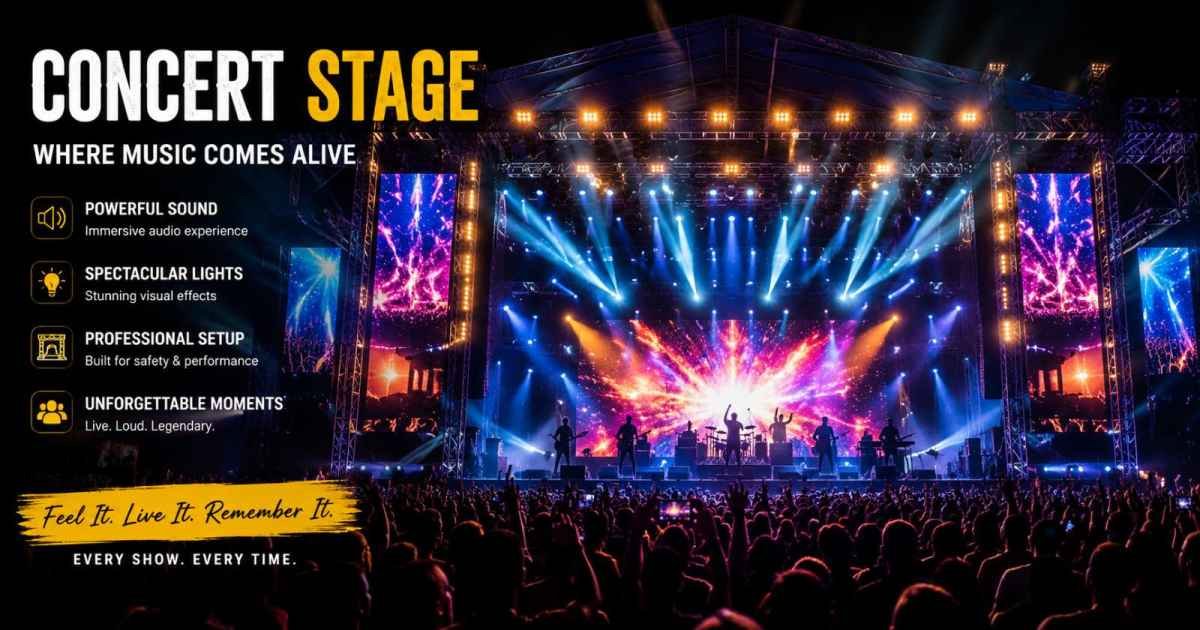
A concert stage is much more than a platform where musicians perform. In 2026, it has evolved into the heart of every live event, blending advanced technology, creative stage architecture, immersive lighting, crystal-clear sound systems, and stunning visual effects into one unforgettable experience. Whether you’re organizing a local band performance, a corporate concert, a college event, or a world-class music festival, understanding how a modern concert stage works is essential for delivering a safe and memorable show.
Today’s audiences expect more than great music—they expect an immersive production. That’s why stage design has become one of the biggest factors in the success of live entertainment. This guide explains everything you need to know about concert stage design, types, setup, components, trends, and costs in 2026.
What Is a Concert Stage and Why Does It Matter?
A concert stage is a specially engineered elevated structure designed to support live performances while providing excellent visibility, safety, and acoustics for both performers and audiences.
In 2026, a concert stage serves as the centerpiece of the entire production. Rather than being a simple raised platform, it integrates LED displays, intelligent lighting, digital audio systems, automated effects, and advanced rigging to create an immersive environment.
A professionally designed stage provides several important benefits:
- Improves audience visibility from every seating area.
- Enhances sound distribution throughout the venue.
- Supports creative lighting and visual storytelling.
- Provides safe workspaces for performers and production crews.
- Improves crowd management and emergency access.
- Allows smooth backstage operations, equipment changes, and artist movement.
Whether it’s a pop concert, rock festival, EDM event, country music show, classical orchestra, or cultural festival, the quality of the stage directly influences the audience experience.
Different Types of Concert Stages
Choosing the right stage depends on the venue, audience size, performance style, production requirements, and budget. The most popular stage designs in 2026 include:
1. End Stage
The End Stage remains the industry’s most common setup. Positioned at one end of the venue, the audience watches from a single direction. It works perfectly for arenas, theaters, indoor venues, and convention centers.
Best for:
- Concert halls
- Indoor music events
- Corporate shows
- Touring productions
2. Thrust Stage
A Thrust Stage extends into the audience, allowing spectators to surround three sides of the performance area. This creates stronger audience interaction and better visibility.
Ideal for:
- Live bands
- Theater productions
- Award ceremonies
- Acoustic performances
3. In-the-Round (360° Stage)
One of the fastest-growing stage layouts in 2026, the 360-degree stage places the audience completely around the performers.
This design is commonly used by major international touring artists because it creates an intimate experience even inside massive stadiums.
4. Festival Stage
Outdoor festivals require enormous heavy-duty stages capable of supporting:
- Huge LED walls
- Massive speaker arrays
- Pyrotechnics
- Moving lights
- Large roof structures
Festival stages are engineered for quick artist changeovers while handling thousands—or even hundreds of thousands—of attendees.
5. Portable or Mobile Stage
A mobile concert stage is built onto a truck or trailer and unfolds into a complete performance platform.
Advantages include:
- Fast installation
- Lower labor costs
- Easy transportation
- Ideal for community events, schools, fairs, and city festivals
6. Catwalk or Runway Stage
A catwalk stage extends from the main platform into the audience, allowing artists to engage closely with fans.
This design has become a defining feature of pop, hip-hop, and stadium tours throughout 2026.
Key Components of a Modern Concert Stage
A professional concert stage consists of several interconnected systems designed for performance quality, reliability, and safety.
Stage Platform and Decking
The stage floor supports performers, instruments, and production equipment.
Modern stages typically feature:
- Modular aluminum platforms
- Heavy-duty decking
- Adjustable legs
- Non-slip surfaces
- High load capacities
Truss System
The truss system forms the structural backbone of the production.
It supports:
- Stage lighting
- LED video walls
- Loudspeakers
- Special effects
- Rigging equipment
In 2026, lightweight aluminum truss systems remain the industry standard because they combine strength with easy transportation.
Roof Structure
Outdoor concerts require weather-resistant roofing systems to protect:
- Performers
- Audio equipment
- Lighting fixtures
- LED screens
- Crew members
Modern roofs are engineered to withstand challenging weather conditions while supporting heavy production loads.
Professional Sound System
Exceptional sound quality depends on carefully designed audio systems, including:
- Line array speakers
- Subwoofers
- Stage monitors
- Wireless microphones
- Digital mixing consoles
- Audio networking technology
Professional sound engineers ensure consistent audio coverage across the venue.
Lighting System
Lighting transforms performances into immersive experiences.
Popular lighting equipment includes:
- Moving head fixtures
- LED wash lights
- Spotlights
- Laser systems
- Pixel-mapped lighting
- Intelligent lighting controllers
Lighting is synchronized with music to maximize emotional impact.
LED Video Displays
Large LED screens display:
- Live camera feeds
- Animations
- Artist branding
- Visual effects
- Song-specific graphics
Many productions now use transparent LED panels, curved displays, and interactive LED flooring.
Backstage and Green Rooms
Behind the scenes, productions require dedicated spaces for:
- Artist preparation
- Costume changes
- Equipment storage
- Technical coordination
- Crew communication
Efficient backstage layouts improve overall event operations.
Barricades and Safety Systems
Safety remains a top priority.
Essential features include:
- Crowd barriers
- Stage railings
- Emergency exits
- Fire safety systems
- Rigging inspections
- Electrical protection
Professional event organizers always follow local safety regulations and engineering standards.
Concert Stage Design Trends in 2026
Modern audiences expect concerts to feel cinematic and interactive. The biggest trends shaping concert stages in 2026 include:
Immersive LED Stage Design
Traditional backdrops have largely been replaced by:
- Massive curved LED walls
- Transparent LED screens
- 3D LED floors
- Wraparound digital scenery
These technologies allow visuals to change instantly with every song.
Automation and Moving Stages
Motorized platforms, rotating stages, automated lifts, and programmable moving scenery create dynamic performances that continuously evolve throughout the show.
Drone Light Shows
Many outdoor concerts now incorporate synchronized drone performances as environmentally friendly alternatives to traditional fireworks.
Artificial Intelligence Integration
AI-powered systems help production teams optimize:
- Lighting sequences
- Audio balancing
- Camera switching
- Real-time visual effects
- Audience engagement
Interactive Audience Experiences
Concertgoers increasingly become part of the production through:
- Smartphone-controlled lighting
- Augmented reality features
- Live audience polls
- Wearable LED wristbands
- Interactive projections
Sustainable Stage Design
Environmental responsibility has become a major priority.
Many productions now use:
- Energy-efficient LED lighting
- Solar-powered equipment
- Recyclable stage materials
- Reduced-emission generators
- Reusable modular staging systems
Concert Stage Setup Process
Building a successful concert stage requires careful planning and coordination.
The typical setup process includes:
- Venue inspection and site measurements.
- Stage design based on audience size and production needs.
- Foundation and decking installation.
- Truss assembly and structural inspection.
- Roof installation for outdoor events.
- Rigging of lighting, speakers, and LED screens.
- Power distribution and electrical safety testing.
- Audio and lighting programming.
- Sound check with performers.
- Final safety inspection before opening gates.
Large festival stages often require several days of construction, while smaller portable stages may be ready within a few hours.
How Much Does a Concert Stage Cost in 2026?
Concert stage pricing varies significantly depending on size, equipment, duration, and production complexity.
Typical cost ranges include:
| Stage Type | Estimated Cost (2026) |
|---|---|
| Small portable stage | $2,000–$8,000 |
| Medium concert stage | $10,000–$35,000 |
| Large arena production | $50,000–$250,000+ |
| Major festival stage | $300,000–$2 million+ |
Additional expenses may include:
- Professional lighting
- LED video walls
- Sound systems
- Rigging crews
- Transportation
- Permits
- Security
- Power generators
- Insurance
- Stage decoration
- Special effects
- Pyrotechnics
Hiring experienced production companies often saves money by reducing delays, improving efficiency, and minimizing safety risks.
Conclusion
In 2026, the concert stage has become the foundation of unforgettable live entertainment. It combines engineering, architecture, audiovisual technology, creativity, and safety to transform ordinary performances into extraordinary experiences.
Whether you’re planning a small community concert, a touring production, or a large-scale music festival, investing in the right stage design, sound system, lighting, LED technology, and safety infrastructure is essential. Understanding the different types of concert stages, their key components, the latest design trends, and realistic costs allows organizers to create events that captivate audiences while ensuring smooth operations behind the scenes.
As technology continues to evolve, concert stages will become even more immersive, sustainable, interactive, and visually spectacular, making live performances in the years ahead more engaging than ever before.



 Techknology3 months ago
Tracqueur: The Complete Guide to Modern Tracking Technology
- Business3 months ago
Suhaib Zaino: Biography, Career, Background, and Public Profile
- Lifestyle3 months ago
Wolverhampton Tips: The Ultimate Local’s Guide to the West Midlands Gem
- Tech2 months ago
The Ultimate Guide to Capital IQ: Features, Benefits, and How It Compares to Competitors for Financial Intelligence
- Tech3 months ago
Repmold: The Future of Rapid Mold Manufacturing and Prototyping
- Fashion3 months ago
Janet Lee Constantine: The Private Life, Family, and Legacy of Leon Russell’s Devoted Wife
- Tech2 months ago
CreditFresh Review 2026: Is This Line of Credit a Smart Choice or a Costly Trap?
- Tech3 months ago
Meredith Schwarz: A Story of Quiet Strength, Professional Acumen, and Privacy