
Sports
The Complete Guide to Aintree Results: Grand National History, 2026 Winners, and Aintree Festival Triumphs


The Complete Guide to Aintree Results: Grand National History, 2026 Winners, and Aintree Festival Triumphs
When the roar of the crowd echoes across Merseyside and the thunder of hooves shakes the hallowed turf of Aintree Racecourse, the world stops to witness one of sport’s most extraordinary spectacles. The Aintree Grand National is not merely a horse race; it is a national institution, a test of courage, stamina, and jumping precision that has captivated audiences since its inception in 1839. For punters, enthusiasts, and casual viewers alike, the quest for “aintree results” extends far beyond a simple finishing order. It represents a deep dive into a rich tapestry of sporting history, breeding excellence, and the unpredictable drama that only the world’s greatest steeplechase can provide. This comprehensive guide explores the anatomy of these iconic results, dissecting the recent triumphs and the legends that have defined the sport.
The Historic Significance of Aintree Racecourse
Aintree is steeped in a history that feels almost mythical to racing fans. It is a venue where the ghosts of champions past seem to whisper from the starting post. The very name evokes images of legendary winners who have become household names, their achievements woven into the fabric of British and Irish sporting culture. The history of Aintree results is a chronicle of equine bravery and jockey genius. From the earliest victories, such as the 1919 race won by Poethlyn at odds of 11/4 under Ernest Piggott, to the modern-day spectacles, the race has continually delivered moments of breathtaking exhilaration and heart-stopping despair . However, the modern era of Aintree’s prestige was arguably cemented by the extraordinary deeds of one horse: Red Rum. His three victories in 1973, 1974, and 1977, alongside two runner-up finishes, remain the gold standard by which all subsequent Aintree results are measured . Red Rum did not just win; he captured the public imagination, transforming the Grand National from a sporting event into a cultural phenomenon and ensuring that the focus on Aintree results would remain intense year after year.
The racecourse itself has undergone significant changes over the decades to enhance safety and the spectacle for spectators. The course’s unique character is defined by its fearsome fences, most notably Becher’s Brook and The Chair, which have become synonymous with the National’s fearsome reputation. The results from Aintree are often a story of survival as much as speed, with horses and jockeys needing to navigate these formidable obstacles with unerring accuracy. The 1993 “shambles” race, where a false start led to a void result, serves as a stark reminder that even in the modern era, the chaos and unpredictability of the National can overshadow even the most prepared plans . Such incidents underscore the importance of official Aintree results as the final, definitive account of what transpired on the day, providing clarity amidst the chaos.
Breaking Down the Aintree Festival Results
While the Grand National is undeniably the crown jewel of the Aintree calendar, it is part of a larger, three-day festival that showcases the best jump racing talent from Britain and Ireland. The Aintree Festival, held annually in April, offers a stellar lineup of Grade 1 and Grade 2 races that attract the finest horses in training. The results from the entire festival provide a comprehensive picture of form, rivalries, and emerging stars, often setting the stage for future champions. The 2026 Aintree Festival was a testament to the strength of Irish racing, with Willie Mullins continuing his dominance and horses like Mange Tout making an immediate impression on the first day .
The opening day of the 2026 festival delivered thrilling action across seven races, establishing early form lines for the rest of the season. In the prestigious Boodles Anniversary 4-Y-O Juvenile Hurdle, Mange Tout, ridden expertly, secured victory at 6/1, setting a high bar for the juveniles on display . The day also featured the William Hill Manifesto Novices’ Chase, a key indicator of future chasing talent, which was won by the impressive Koktail Divin at 3-1 . These early Aintree results are not just for the immediate glory; they are vital for owners and trainers planning their championship campaigns for the following year and provide valuable data for punters looking to identify the next big star in National Hunt racing.
The Aintree Festival results are often more nuanced than the Grand National, focusing on specific distances, ground conditions, and race classes that can significantly impact a horse’s performance. For instance, the Grade 1 races, such as the William Hill Aintree Hurdle, often feature the elite hurdlers of the season. In 2026, Brighterdaysahead lived up to expectations with a victory at 13/8, outclassing a strong field that included The New Lion and Alexei . These results create an annual roll of honor that is meticulously studied by bloodstock agents and racing historians. They provide a consistent benchmark for quality, and a deep understanding of these patterns is what separates the casual observer from the serious racing analyst.
Grand National 2026: A Detailed Race Analysis
The 2026 Grand National, run on Saturday, April 11, produced a result that will be etched into the annals of racing history for decades to come. In a thrilling display of stamina and tactical brilliance, I Am Maximus, ridden by the exceptional Paul Townend, stormed to a second victory in the race, having previously won in 2024 . This remarkable achievement saw I Am Maximus become only the second horse since the legendary Red Rum to regain the Grand National crown, confirming his status as one of the great modern champions of the sport . The winning time of 9 minutes 9.68 seconds reflected the fast ground and the extraordinary quality of the field, and the finish saw him pull clear of the field by a comfortable margin .
The final standings from the 2026 Grand National tell a story of dominance by owner JP McManus and trainer Willie Mullins. The official finishing order saw I Am Maximus lead home a spectacular one-two for McManus, with Iroko finishing a gallant second at 18/1, followed by Jordans in third and Johnnywho in fourth . This result marked a record-equalling fourth victory in the Grand National for both McManus and Mullins, cementing their legacy as the most formidable team in the modern era of National Hunt racing . For those studying the Aintree results for 2026, this specific set of finishing positions highlights the sheer depth of the Mullins yard, demonstrating an unprecedented ability to prepare multiple horses for the unique demands of the Aintree circuit .
However, the drama of the Grand National was not confined to the winners. The 2026 race was also notable for its high attrition rate, a characteristic that is central to the race’s enduring mystique. From the 34 runners, only 16 managed to complete the grueling four-and-a-half-mile course, a stark reminder of the physical toll the race exacts . The field was decimated by falls and unseated riders, with notable casualties including the previously successful Patrick Mullins on last year’s winner Nick Rockett, who parted company with his mount at the first fence, and the fall of the favorite Panic Attack at the third . The complete list of non-finishers, including horses like Gerri Colombe, Stellar Story, and Top Of The Bill, adds a layer of context to the final result, reminding fans that merely finishing the race is a triumph in itself .
The Vital Statistics: What the Aintree Results Tell Us
Analyzing Aintree results goes beyond simply knowing the winner; it requires understanding the data behind the performances. The weight carried, the odds, and the distance between horses all contribute to the narrative of the race. In 2026, I Am Maximus started as the 9-2 favorite, reflecting his previous victory and the confidence of the betting public . This was a significant shift from the previous year when 33-1 shot Nick Rockett had upset the odds . The 2025 Aintree results had been a triumph for the underdog, with Patrick Mullins securing his first National victory on the long-shot, but 2026 was a return to form for the market leaders, demonstrating how the race can swing between the expected and the improbable .
Aintree Results 2026 – Grand National Finishing Order
| Position | Horse | Jockey | Starting Price (SP) |
|---|---|---|---|
| 1st | I Am Maximus | Paul Townend | 9-2 Fav |
| 2nd | Iroko | Jonjo O’Neill Jr | 18-1 |
| 3rd | Jordans | Ben Jones | 28-1 |
| 4th | Johnnywho | R.P. McLernon | 12-1 |
| 5th | High Class Hero | James Bowen | 66-1 |
| 6th | Favori De Champdou | Danny Gilligan | 40-1 |
| 7th | Final Orders | Conor Stone-Walsh | 22-1 |
Source: BBC Sport / The Mirror
These statistics also show the remarkable consistency of the McManus/Mullins partnership. Having three of the first four finishers in the race is an almost unprecedented achievement in a handicap of this nature . The Aintree results from 2026 will therefore be remembered not just for the brilliant victory of I Am Maximus, but for the sheer dominance of a single owner, highlighting how financial backing combined with elite training can create a dynasty. For the lay punter, seeing such results can sometimes be frustrating, but for the sport, it showcases the pinnacle of excellence that can be achieved in preparing horses for the unique test of Aintree.
The Roll of Honor: Past Winners and the Route to Aintree
To fully appreciate the significance of any given Aintree result, one must look at the past champions that have graced the famous turf. The roll of honor for the Grand National features names that define the sport’s history. In recent years, the race has seen a revival of Irish training dominance, with Willie Mullins leading the charge with victories by Nick Rockett and I Am Maximus in consecutive years . This winning streak follows in the footsteps of other great Irish trainers like Vincent O’Brien, who won three Nationals in the 1950s . The Aintree results from the last decade show a clear trend: the top prizes are increasingly going to horses who have been carefully campaigned by the most powerful stables in Ireland, who view the Grand National as the ultimate target.
The journey to the start line at Aintree is often as compelling as the race itself. Many winners use specific prep races at courses like Cheltenham or Punchestown to build fitness and confidence. Examining the historical Aintree results reveals patterns, such as the success of horses who have previously placed in the Irish Grand National or had an outing during the Cheltenham Festival. For instance, I Am Maximus’s victory in 2024 and subsequent second place in 2025 set him up perfectly for his 2026 triumph, echoing the tactics used by previous multiple winners . The historical records, including the full finishing orders from races like the 1922 Grand National won by Music Hall, provide the bedrock for understanding these patterns .
Ultimately, the “aintree results” are more than just names on a page; they are a living history of sport, courage, and the unbreakable bond between horse and rider. From the historic first broadcast of the race on BBC radio in 1927 to the global live streams of the modern era, the interest in these results has only intensified . They represent the culmination of years of effort by owners, trainers, and stable staff, and they provide the definitive answer to the question that lingers in every punter’s mind. Whether it is the triumph of a 100/1 outsider like Foinavon in 1967 or the historical dominance of a favorite like I Am Maximus, the results are the final chapter of a story that unfolds every spring at Aintree.
Conclusion
The Aintree Grand National and the wider Aintree Festival continue to captivate the world, offering a unique blend of sporting excellence, historical weight, and dramatic unpredictability. The “aintree results” are not merely a list of finishing positions; they are a historical record that tells the story of triumph and tragedy, of equine greatness and human endeavor. As the 2026 results demonstrate with the historic second victory of I Am Maximus, the race has an enduring capacity to produce moments of unforgettable sporting glory, solidifying the legacies of the horses, jockeys, and trainers who dare to conquer the world’s greatest steeplechase.
The data from the 2026 edition provides essential context for the future of the sport. The dominance of trainer Willie Mullins and owner JP McManus signals a new era of power in National Hunt racing, while the attrition rate of the race serves as a constant reminder of its unique challenges. For enthusiasts, historians, and punters, studying the Aintree results is a year-round pursuit, offering endless insights into form, breeding, and the tactical nous required to win the most prestigious prize in jump racing. The history of Aintree is written in these results, and the story continues to unfold with every gallop.
Frequently Asked Questions (FAQ)
Q1: Who won the Grand National at Aintree in 2026?
A: The 2026 Grand National was won by I Am Maximus, ridden by jockey Paul Townend, in a time of 9m 9.68s. This was his second victory in the race, having previously won in 2024 .
Q2: Where can I find the full list of finishers for the Aintree Grand National?
A: The full list of finishers and their positions is widely reported by major sports news outlets. For 2026, top finishers included Iroko in second, Jordans in third, and Johnnywho in fourth. Only 16 out of 34 runners completed the course .
Q3: Who are the most successful owners and trainers in recent Aintree history?
A: Owner JP McManus and trainer Willie Mullins have been exceptionally successful. Their 2026 victory was a record-equalling fourth win in the Grand National for both men, with Mullins achieving three successive wins from 2024 to 2026 .
Q4: What is the Aintree Festival, and when does it take place?
A: The Aintree Festival is a three-day horse racing meeting held at Aintree Racecourse in April, culminating in the Grand National on the final Saturday. It features several top-class Grade 1 races across the three days .
Q5: What caused the “void” Grand National of 1993?
A: The 1993 Grand National was declared void after a chaotic start. Protestors on the track and issues with the starting tape led to a false start. A recall flag was not waved properly, resulting in 30 of the 39 jockeys racing a full circuit before realizing the race had not officially begun .
Sports
Thornbury RFC: The Complete Guide to the Historic Rugby Club, Teams, Facilities, and Community
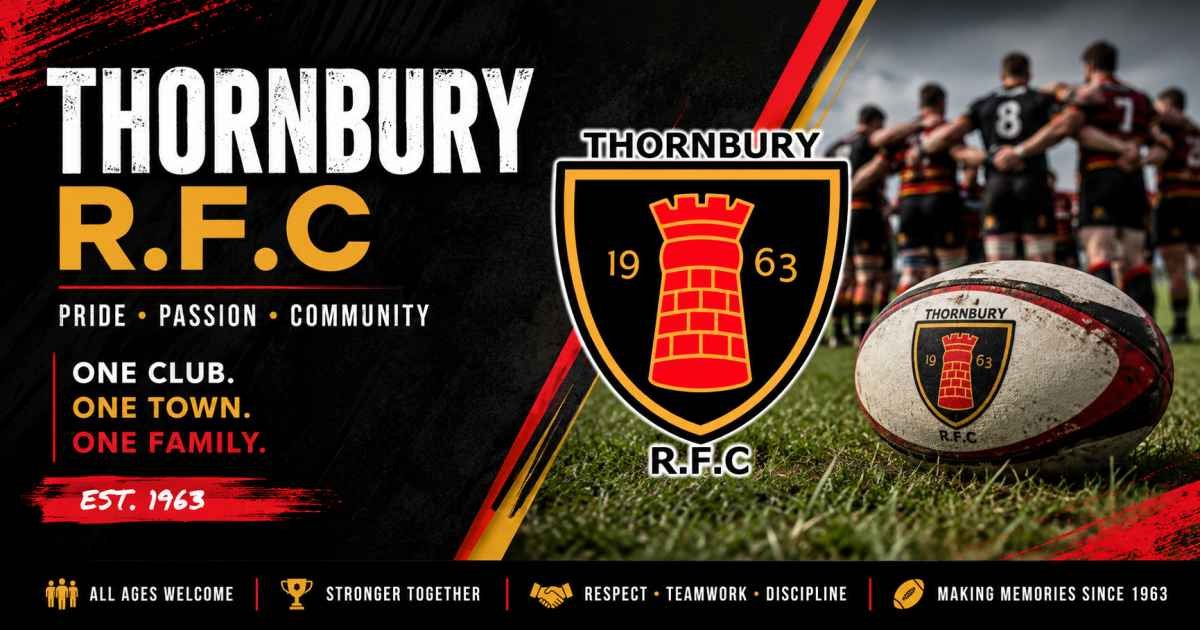
Thornbury RFC is one of the South West of England’s most respected community rugby clubs. Located in Thornbury, South Gloucestershire, the club has built a strong reputation for competitive rugby, outstanding youth development, and a welcoming environment for players of all ages and abilities.
Whether you’re a new supporter, aspiring player, parent, or rugby enthusiast, this comprehensive 2026 guide explains everything you need to know about Thornbury Rugby Football Club, including its history, teams, facilities, achievements, and why it continues to thrive.
The History of Thornbury RFC
Thornbury Rugby Football Club (RFC) was officially established in 1963 by a small group of rugby enthusiasts determined to bring organized rugby union back to the town. However, rugby’s roots in Thornbury stretch much further back, with records showing local rugby activity as early as the 1880s.
Since its formation, the club has grown from a single men’s team into a modern rugby organization featuring:
- Senior Men’s squads
- Women’s rugby
- Junior and Mini rugby
- Colts teams
- Veterans rugby
- Community rugby programs
Today, Thornbury RFC remains affiliated with the RFU, Gloucestershire RFU, and Bristol & District Combination, continuing its tradition of developing rugby talent across generations.
Where Is Thornbury RFC Located?
The club is based at Rockhampton Road, Thornbury, South Gloucestershire (BS35 1LG), where players and supporters enjoy excellent rugby facilities.
The venue includes:
- Multiple rugby pitches
- Modern clubhouse
- Changing rooms
- Bar and social facilities
- Training areas
- Match-day spectator space
- Parking
The clubhouse serves as the heart of the local rugby community, hosting matches, social events, club celebrations, and meetings throughout the year.
Senior Rugby, Women’s Teams, and Youth Development
One of Thornbury RFC‘s greatest strengths is its comprehensive player pathway.
Senior Men’s Rugby
The men’s section regularly competes in regional RFU competitions while maintaining both First XV and Second XV squads. Recent club updates for the 2026–27 season announced new league opponents and fixtures as preparations continued for another competitive campaign.
Women’s Rugby
Women’s rugby has experienced significant growth at Thornbury RFC.
The women’s team competes regularly, attracting new players and helping expand female participation within the club.
Mini and Junior Rugby
The youth section is among the club’s proudest achievements.
Young players can begin rugby at an early age through structured coaching that emphasizes:
- teamwork
- discipline
- respect
- fitness
- enjoyment
Many local players progress from junior rugby into senior squads, strengthening the club’s long-term future.
Colts Rugby
Older youth players continue their development through the Colts programme before transitioning into senior rugby.
Training, Coaching, and Player Development
Thornbury RFC places strong emphasis on quality coaching.
Training sessions typically include:
- Skills development
- Strength and conditioning
- Game strategy
- Defensive organization
- Set-piece practice
- Match preparation
According to club information, training is generally held on Tuesday and Thursday evenings, with new players always welcome to attend and experience the club environment.
The coaching philosophy focuses on developing confident players while maintaining rugby’s core values of:
- Respect
- Discipline
- Teamwork
- Sportsmanship
- Continuous improvement
Club Culture and Community Spirit
While competitive rugby remains important, Thornbury RFC is equally recognized for its welcoming community atmosphere.
Throughout the year, members enjoy:
- Club dinners
- Fundraising events
- Family days
- Social evenings
- Volunteer activities
- Youth celebrations
- Community partnerships
Volunteers are essential to the club’s continued success, contributing as coaches, administrators, referees, event organizers, grounds staff, and supporters.
The club also promotes equal opportunities and inclusion, encouraging participation regardless of age, gender, ethnicity, ability, or background in line with RFU principles.
2026 Season Updates and Future Goals
The 2026–27 season brings renewed optimism for Thornbury RFC.
Recent club announcements include:
- Henry Low appointed as club captain
- Release of 2026–27 league fixtures
- New league opponents
- Continued development of senior and junior programmes
- Ongoing investment in player development and club facilities
Looking ahead, the club aims to:
- Build stronger senior squads
- Increase youth participation
- Grow women’s rugby
- Improve coaching pathways
- Strengthen community engagement
- Maintain long-term financial sustainability
These objectives position Thornbury RFC well for continued success both on and off the field.
Why Thornbury RFC Remains One of the South West’s Best Community Rugby Clubs
Several qualities distinguish Thornbury RFC from many grassroots clubs:
- Over six decades of rugby tradition
- Strong youth development programme
- Inclusive community culture
- Competitive senior rugby
- Growing women’s section
- Excellent volunteer support
- Modern facilities
- Experienced coaching staff
- Active social calendar
- Commitment to player welfare
The club successfully balances competitive ambition with community values, making it an attractive destination for players of all ages and abilities.
Conclusion
Thornbury RFC continues to demonstrate why community rugby remains such an important part of English sport. Since its official founding in 1963, the club has evolved into a respected organization that combines competitive rugby, excellent coaching, inclusive values, and strong local support.
Whether you’re interested in joining as a player, supporting on match days, volunteering, or introducing a child to rugby, Thornbury Rugby Football Club offers opportunities for everyone. With exciting plans for the 2026 season, dedicated volunteers, and a thriving rugby culture, Thornbury RFC looks set to remain one of the South West’s leading grassroots rugby clubs for many years to come.
Sports
Leek Town Football (Guide): History, Stadium, League, Players, and Why the Blues Continue to Rise
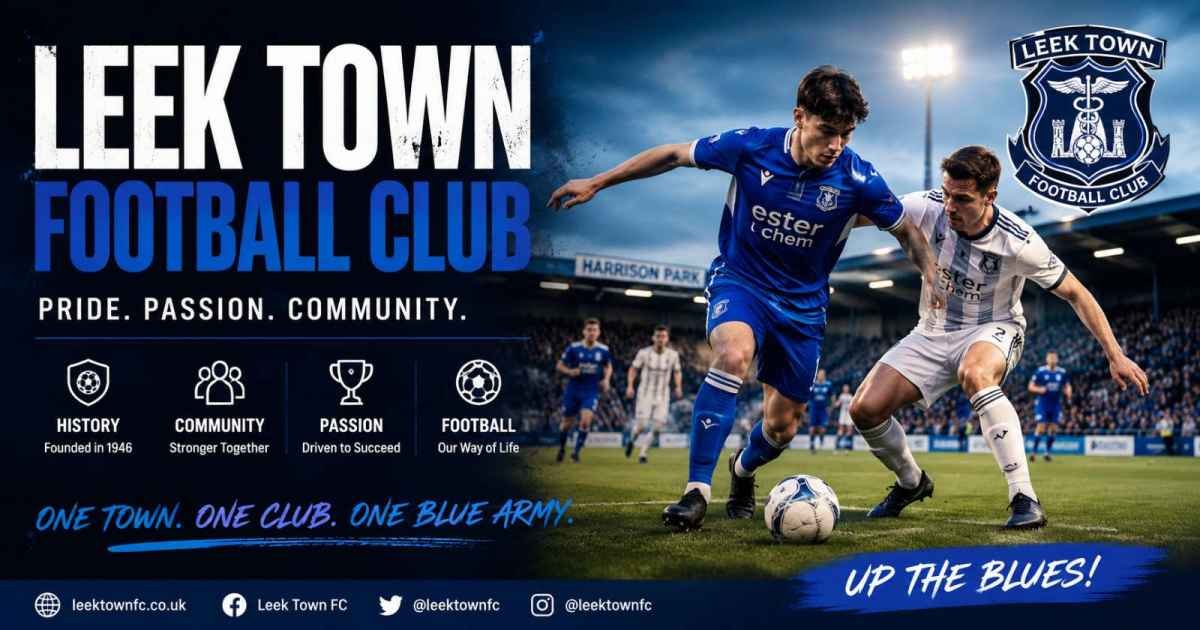
Leek Town Football Club, affectionately known as The Blues, is one of England’s respected non-league football clubs with a proud history dating back to 1946. Based in Leek, Staffordshire, the club has built a loyal fan base through decades of competitive football, memorable cup runs, and a strong commitment to community development.
In 2026, searches for Leek Town football, Leek Town FC fixtures, Leek Town stadium, Leek Town league, and Leek Town players continue to grow as supporters follow the club’s progress in English non-league football.
This complete guide covers everything you need to know about Leek Town Football, including its history, home ground, league structure, youth development, achievements, supporters, and future ambitions.
The History of Leek Town Football Club
Founded in 1946, Leek Town Football Club has become one of Staffordshire’s best-known non-league football institutions. Since its formation, the club has competed across several levels of the English football pyramid, earning a reputation for resilience, competitive spirit, and community involvement.
Throughout its history, Leek Town has experienced promotions, challenging seasons, and memorable cup campaigns that have helped shape the club’s identity. While reaching the professional leagues has remained a long-term ambition, the club has consistently demonstrated its ability to compete against strong opposition.
One of the defining characteristics of Leek Town is its commitment to sustainable growth. Rather than relying solely on financial investment, the club has emphasized youth development, experienced coaching, and strong local support.
Home Ground: Harrison Park
One of Leek Town’s greatest assets is Harrison Park, the club’s historic home stadium.
Located in Leek, Staffordshire, Harrison Park has hosted thousands of league matches, cup ties, and community events over the decades. The stadium provides an intimate matchday atmosphere where supporters are close to the action, creating an exciting environment for players and fans alike.
Key features of Harrison Park include:
- Main seated stand
- Covered terraces
- Modern changing facilities
- Hospitality areas
- Clubhouse
- Training facilities
- Food and refreshment services
- Family-friendly matchday experience
The stadium continues to receive improvements aimed at enhancing supporter comfort while meeting league requirements.
Which League Does Leek Town Play In?
As of 2026, Leek Town Football Club competes within the English non-league football pyramid, facing ambitious clubs from across the Midlands and Northern England.
English football operates through a pyramid system that allows clubs to earn promotion or face relegation based on performance each season.
Competing in non-league football requires consistency because clubs play demanding schedules featuring:
- League fixtures
- FA Cup qualifying rounds
- FA Trophy matches
- County competitions
- Local cup tournaments
Promotion remains one of the club’s long-term objectives, with every successful season bringing Leek Town closer to higher levels of English football.
Players, Coaching Staff, and Club Development
A major strength of Leek Town Football Club is its focus on developing talented players while maintaining a competitive first-team squad.
The club combines:
- Experienced senior players
- Emerging young talent
- Local footballers
- Skilled coaching staff
- Sports science support
- Community volunteers
The coaching staff emphasizes:
- Tactical discipline
- Physical fitness
- Technical development
- Teamwork
- Professional attitude
Young players often progress through local football before earning opportunities with the senior squad, helping maintain a strong connection between the club and the surrounding community.
Community Impact and Youth Football
Leek Town is much more than a football club. It serves as an important part of the local community by supporting football development at all ages.
Community initiatives include:
Youth Development
The club encourages children and teenagers to participate through organized football programs and coaching sessions.
School Partnerships
Leek Town regularly works alongside local schools to promote healthy lifestyles and participation in sport.
Volunteer Opportunities
Many matchday operations depend on dedicated volunteers who assist with hospitality, ticketing, maintenance, media, and club events.
Community Events
Beyond football, Harrison Park frequently hosts fundraising events, family activities, and local celebrations that strengthen community engagement.
This close relationship between the club and its supporters has helped create one of the strongest community cultures in non-league football.
Why Fans Love Leek Town Football
Supporters remain at the heart of Leek Town’s success.
Unlike many larger professional clubs, fans enjoy a more personal football experience where players, coaches, and supporters regularly interact before and after matches.
Reasons supporters continue following Leek Town include:
- Affordable match tickets
- Friendly family atmosphere
- Passionate local supporters
- Exciting non-league football
- Strong community identity
- Historic traditions
- Competitive football
- Accessible players and staff
Home matches at Harrison Park often create an energetic atmosphere filled with loyal supporters proudly backing The Blues throughout the season.
The Future of Leek Town Football in 2026 and Beyond
The future looks encouraging for Leek Town Football Club. Like many ambitious non-league clubs, Leek Town continues investing in facilities, youth development, coaching, and supporter engagement while striving for consistent success on the pitch.
Key priorities include:
- Competing for promotion opportunities
- Expanding youth development pathways
- Improving club facilities
- Growing commercial partnerships
- Increasing matchday attendance
- Strengthening digital engagement with supporters
- Maintaining financial sustainability
- Continuing community outreach programs
As English non-league football becomes increasingly competitive, clubs that balance sporting ambition with responsible management are best positioned for long-term success. Leek Town’s commitment to its supporters and local community provides a solid foundation for continued progress.
Frequently Asked Questions About Leek Town Football
When was Leek Town Football Club founded?
Leek Town Football Club was established in 1946 and has represented the town of Leek for decades.
What is Leek Town’s nickname?
The club is widely known as The Blues, reflecting its traditional team colors.
Where does Leek Town play?
The club plays its home matches at Harrison Park in Leek, Staffordshire.
Does Leek Town have youth football?
Yes. Youth development remains an important part of the club’s long-term strategy, providing opportunities for young players to develop their skills.
Does Leek Town participate in national cup competitions?
Yes. Depending on league qualification, the club competes in tournaments such as the FA Cup and FA Trophy, offering opportunities to face clubs from higher levels of English football.
Final Thoughts
In 2026, Leek Town Football Club continues to represent everything that makes English non-league football special. With a proud history stretching back to 1946, the club combines competitive football, community spirit, and player development to create an environment that supporters are proud to be part of.
Whether you’re researching the club’s history, planning your first visit to Harrison Park, following league results, or simply discovering non-league football, Leek Town FC offers an authentic football experience built on tradition, dedication, and local pride. As The Blues continue pursuing success both on and off the pitch, the club remains an important and respected name within England’s football landscape.


 Techknology3 months ago
Tracqueur: The Complete Guide to Modern Tracking Technology
- Business3 months ago
Suhaib Zaino: Biography, Career, Background, and Public Profile
- Lifestyle2 months ago
Wolverhampton Tips: The Ultimate Local’s Guide to the West Midlands Gem
- Tech2 months ago
The Ultimate Guide to Capital IQ: Features, Benefits, and How It Compares to Competitors for Financial Intelligence
- Tech3 months ago
Repmold: The Future of Rapid Mold Manufacturing and Prototyping
- Fashion3 months ago
Janet Lee Constantine: The Private Life, Family, and Legacy of Leon Russell’s Devoted Wife
- Tech2 months ago
CreditFresh Review 2026: Is This Line of Credit a Smart Choice or a Costly Trap?
- Tech3 months ago
Meredith Schwarz: A Story of Quiet Strength, Professional Acumen, and Privacy